
How to Optimize Home Design for HVAC
We’ve all seen the ways that poor integration of the HVAC design can compromise a home: soffits hither and yon, grills in accent features, or mini split heads shoved in the corner of a room. Working with an HVAC designer like Balance Construction Consulting during the design phase will help avoid these problems, but there are also a few rules of thumb that can help architects and designers prepare their concepts for HVAC. These steps can make the design process easier, and they can significantly reduce the cost of the system installation.
Clarify The Project Goals
The first step is to develop a clear understanding of the client’s comfort and indoor air quality expectations at the project outset. Designers and builders tend to focus on more tangible items during the design process – volumes, views, kitchens, and the like. Comfortable temperatures and good air quality are often taken for granted. Indeed, they are seldom noticed in a finished home unless they are missing, in which case they can ruin a client’s experience of all the other elements of the home.
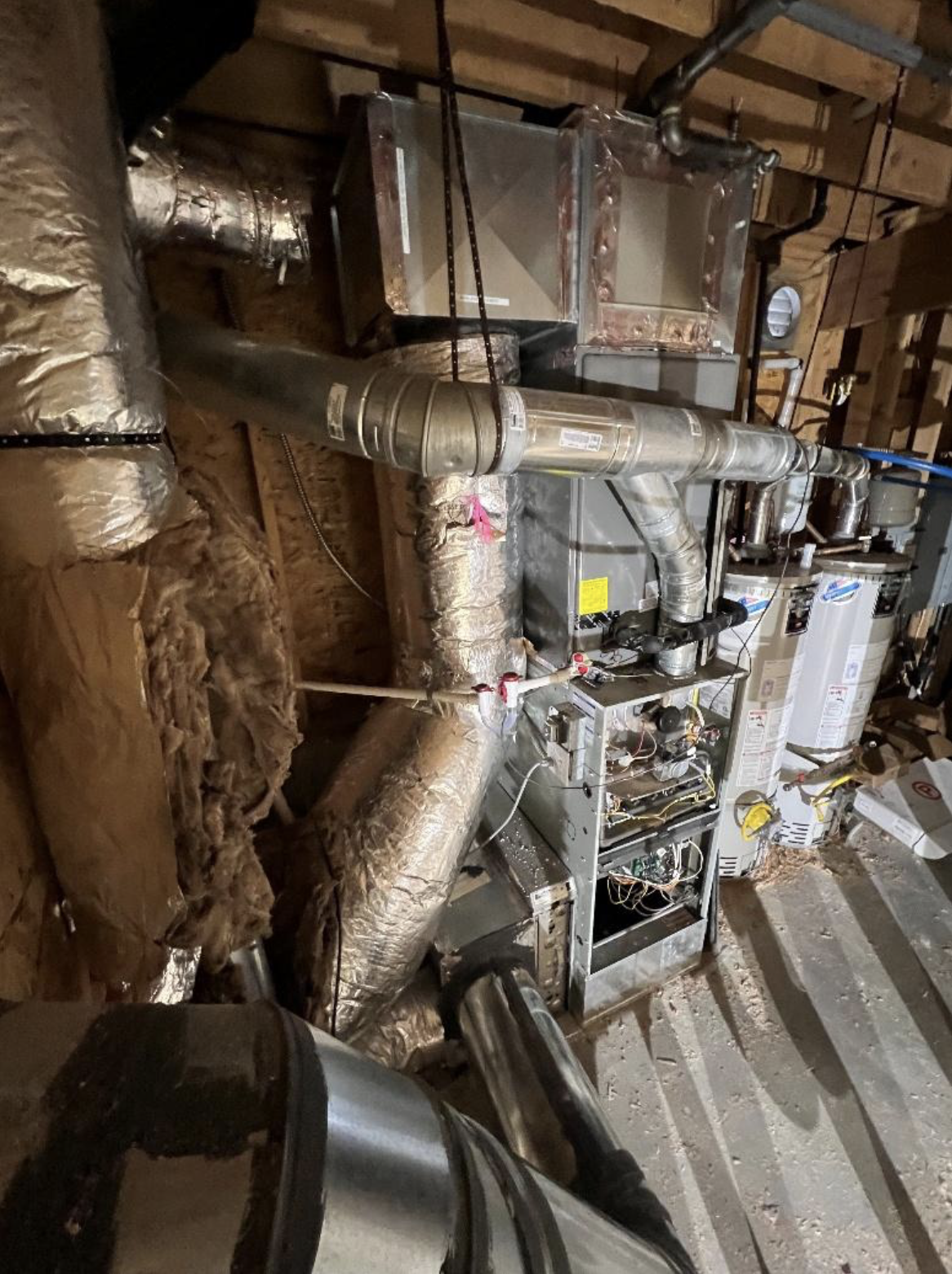
Understanding the client’s expectations from the outset is key because there is now such a wide array of indoor climate equipment available. For many years, planning for HVAC has meant allocating a single small closet in a corner of the home to house a forced air furnace and a water heater and planning to run the ducts in the attic. For very basic home designs, this can still be adequate. But changes in technology, design, and regulatory requirements mean that more and more often, this approach simply does not meet the project’s needs.
Furnaces are being pushed to margins by regulators (and many clients!) eager to meet climate goals. In their place, we are often using heat pump systems, which require at least one outdoor unit. Heat pump systems also allow a wide variety of delivery mechanisms: there are now ductless and radiant options, as well as smaller ducted heat pump systems that can be dedicated to a single zone of the home. Each of these, however, has its own design considerations: radiant cannot be used for cooling, ductless equipment must be located in the room it serves and can be unsightly, and ducted equipment needs dedicated space.
Designers also now need to consider ventilation systems, a concept that until recently was simply not a factor in residential builds. However, there are enormous benefits to installing a good ventilation system, and in some cases, they can be required. However, that means finding space to locate an additional mechanical device and its associated ductwork.
Finally, the WSEC and other building codes are strongly encouraging builders to keep all ductwork inside the conditioned envelope of the home. This improves system efficiency and indoor air quality, but it requires you to find space inside the home for ducts which can be fairly large.
So What Can A Designer Do?
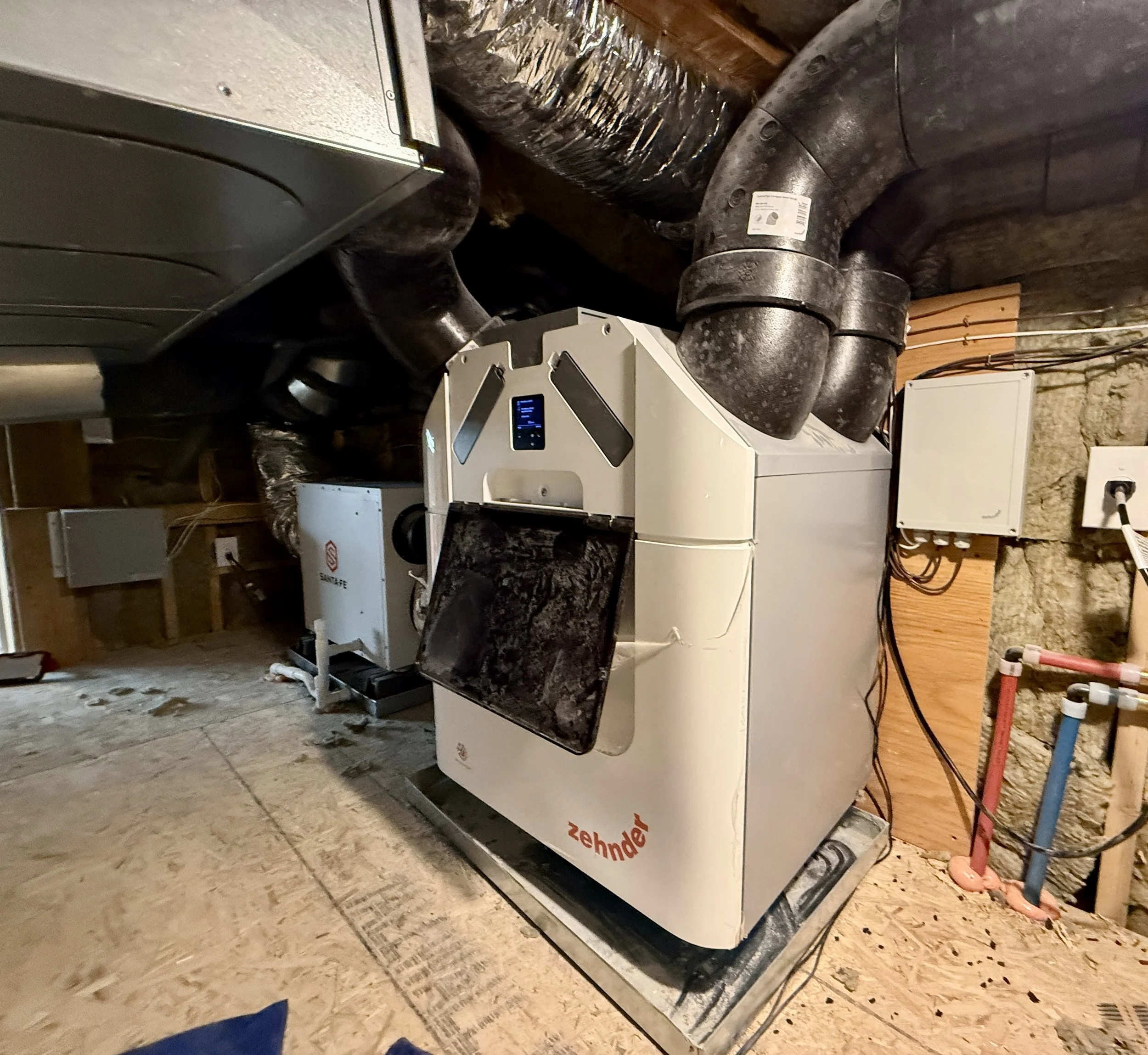
In response to all of these emerging imperatives, I have a few suggestions about how to prepare a home design for a smooth HVAC design and installation process. The first is to provide a genuine mechanical room. This room should be inside the conditioned envelope, and in my experience 6’x10’ is a good size to start with. That is usually enough space to fit the electrical panel, a water heater, an HRV, and a ducted air handler with adequate service access. Do not locate this room under a staircase – stairs require complex framing that limits how mechanical services like pipe, conduit, and ductwork can enter and exit the mechanical room.
My second strong recommendation is to maximize interstitial spaces. One way to do this is to use open web trusses for floor systems where possible. Open web trusses make routing all your mechanicals easy, and make it easy to keep all your ducts in conditioned space without dropping ceilings and soffits, maintaining a clean project aesthetic. Similarly, if your project has attic space, using appropriate details to bring the attic into the conditioned space is often a great approach. This can give you additional space to locate mechanical equipment as well as easy duct routing that is still within the building envelope.
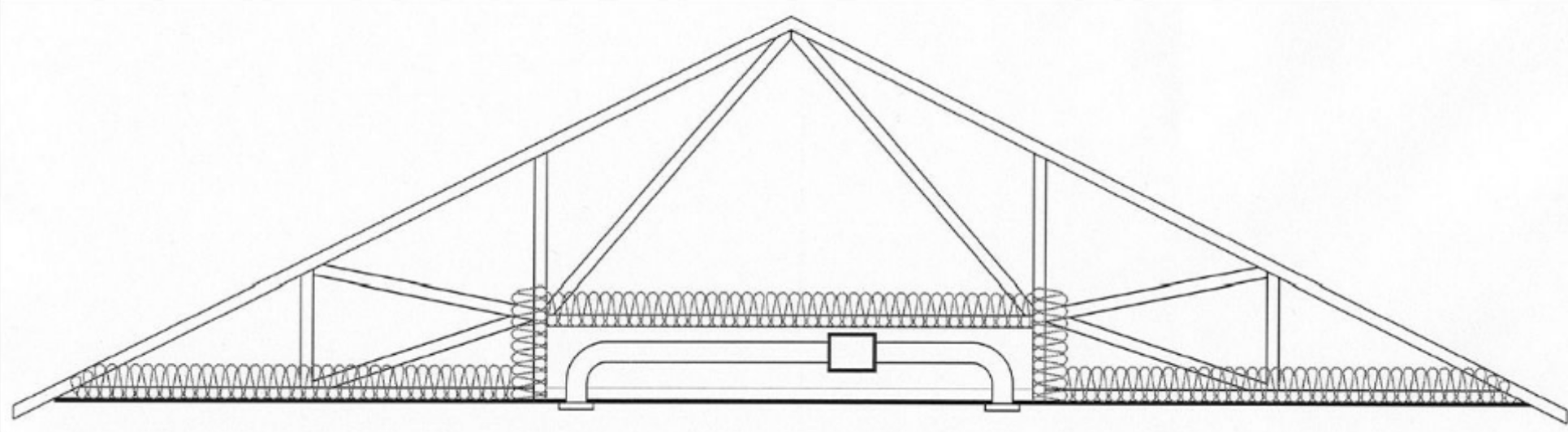
Truss with Chase Space
If some of these options are not available for cost of other reasons, there are ways to mimic them with careful planning. One common approach is to work with truss designers to create an inverted soffit. This is a chase built into the bottom chord of the trusses, which is filled up with ductwork and then drywalled over to make it disappear. In the attic, the insulation runs up over the inverted chase, making it part of the conditioned envelope. A similar effect can be achieved in a hallway with tall ceilings. If your base ceiling height is 9’ or higher, it can make sense to drop the ceiling of a hallway by about one foot, creating a chase for duct work. This leaves the ceiling height unchanged in the more important spaces, like bedrooms and kitchens.
There are many more ways to elegantly integrate the correct HVAC systems into your project while complying with all the requisite regulations, and a good HVAC designer can help you sort through the options and implement the right approach. Here at Balance Construction Consulting, we offer experience not only with HVAC design, but also HVAC installation and general contracting. Having dealt with these problems and solutions in a hands-on manner, we can help guide you to the best solution set for your situation. Contact us today to discuss how we can help you seamlessly deliver comfort and great indoor air quality on your upcoming projects.
Air handlers, on the other hand, are quite simple. They consist of a fan, or blower, which pushes air over a coil, through which refrigerant is passed. The energy in the refrigerant is transferred to the air, or vice versa, and then the refrigerant is passed back out to the condenser to either absorb more energy or dump the energy with which it has been imbued. An air handler can be designed to have ducts attached to it, or to be ductless.
This brings us back, finally, to the infamous mini-split. Most people use this term to refer to the increasingly common ductless air handlers that mount high on a wall. This type of ductless air handler is so common because they are highly efficient and highly cost effective. However, some people object to their aesthetics, so a number of alternative ductless air handler styles are now available. There are options which recess into ceilings, mount low on walls mimicking a radiator, or even a product that looks like an art frame on the wall.
There is also an entire class of air handlers that are designed to be used with duct systems. Though they are essentially the same as mini-splits, these units incorporate more powerful fans to push air through these ducts. They also offer only limited consideration for appearance, since they are intended to be hidden from view. There are even ducted air handlers that provide more or less direct replacement options for traditional furnaces, allowing the existing ductwork to be reused.
Heat pump systems are also flexible in ways that many other heating and cooling systems are not. There are many “multi-zone” heat pumps available currently, which allow a single heat pump to connect to several different fan coils. Each fan coil will have a separate thermostat, allowing great flexibility in how a house is heated or cooled. We can also mix ducted and ductless fan coils to meet different needs in different parts of a building.
As you can see, there are a wide variety of things that can be described as heat pump systems, and the term “mini-split” really only applies to a few of them. A good HVAC design will evaluate all these options and combinations to determine which ones will best suit the specific needs of the project. Criteria can include comfort, cost, efficiency, reliability, and others. Relying on HVAC design by a particular HVAC contractor means you will likely be limited to the systems with which they are most comfortable, or worse yet, those which they are incentivized to sell. Working with a third party HVAC designer, such as Balance Construction Consulting, means that you will get a solution tailored to the specifics of your project.