
Mini-splits and Heat Pumps and Air Handlers, Oh My!
I am often asked to design “mini-split” systems for homes. And my first question is always, “Well, what does that mean to you?” The truth is that there is a lot of terminology around heat pump systems, much of which is applied imprecisely, leading to confusion and misunderstandings. At the same time, many potential users are unaware of some of the options available under the heat pump system umbrella. With a little clarification, we can make our conversations around heat pumps and electrification more accessible and effective.
The term I use most often for the systems that we now use to heat and cool homes is “heat pump system.” A heat pump is a machine that moves heat energy from one place to another. One example is a refrigerator – it moves energy from inside the box to the ambient air inside your home. We are starting to see water heaters that operate on this same principle. But in the context of HVAC, we are usually talking about systems that cool the building by moving energy from inside to outside, or heat the building by moving energy from outside to inside.
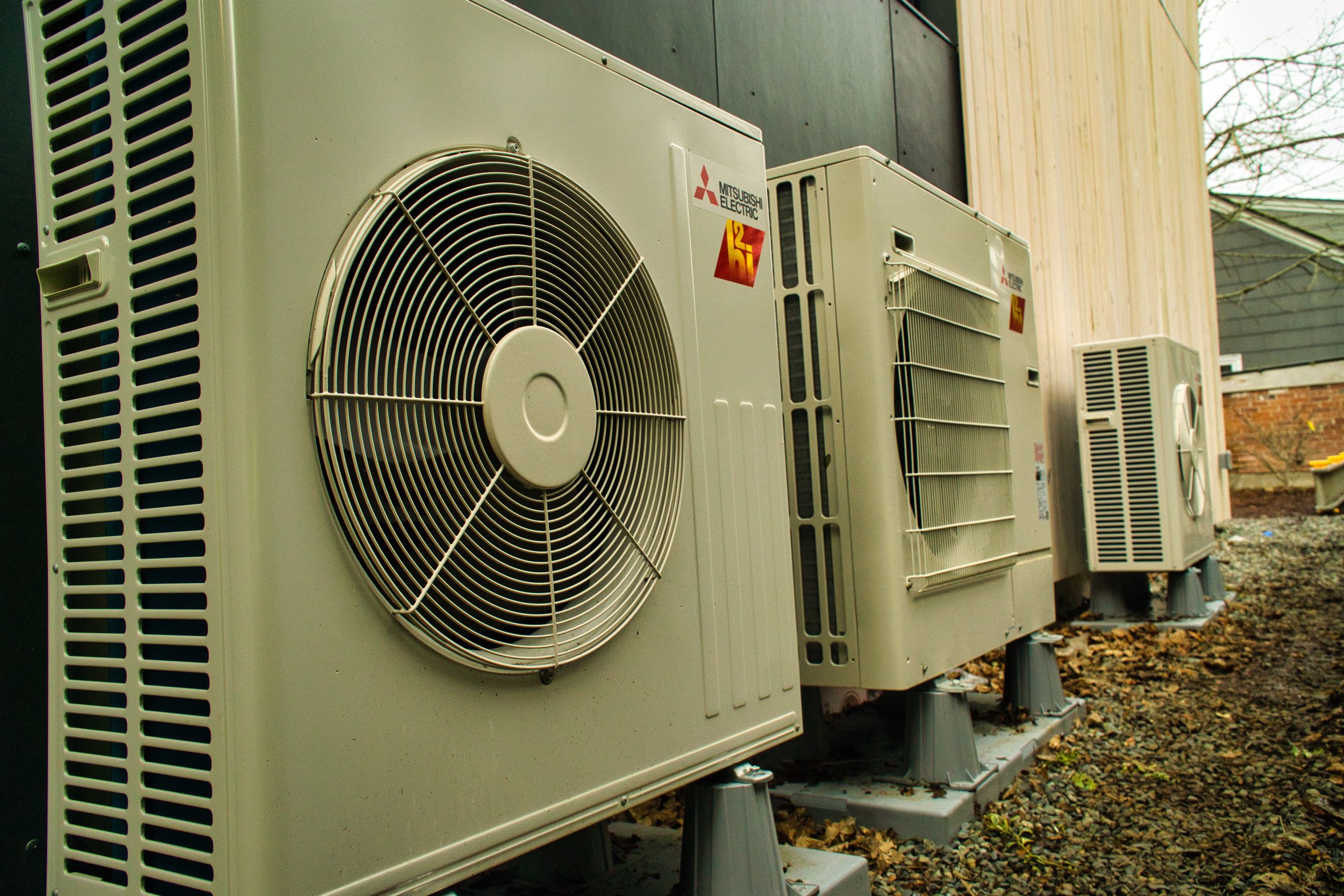
A heat pump system has two key components: a condenser, sometimes referred to as a heat pump or simply an outdoor unit, and an air handler, sometimes called a fan coil or indoor unit. These two components are connected a pair of pipes, often called line set, and a signal wire that allows them to communicate.
Condensers use a compressor and a thermal expansion valve to transfer energy between a source outside the building and a refrigerant. The source can be water or the earth, but the most common source is the ambient air outside. The most common type of system sends this refrigerant directly to the air handler, which is referred to as an air-to-air system. Less commonly, the energy is immediately moved from the refrigerant to water or another liquid storage medium, which we call an air-to-water system. For the remainder of this post, I will focus on air-to-air systems. Air-to-water systems have an intricate variety of pros and cons, which merit their own post. Stay tuned for that.
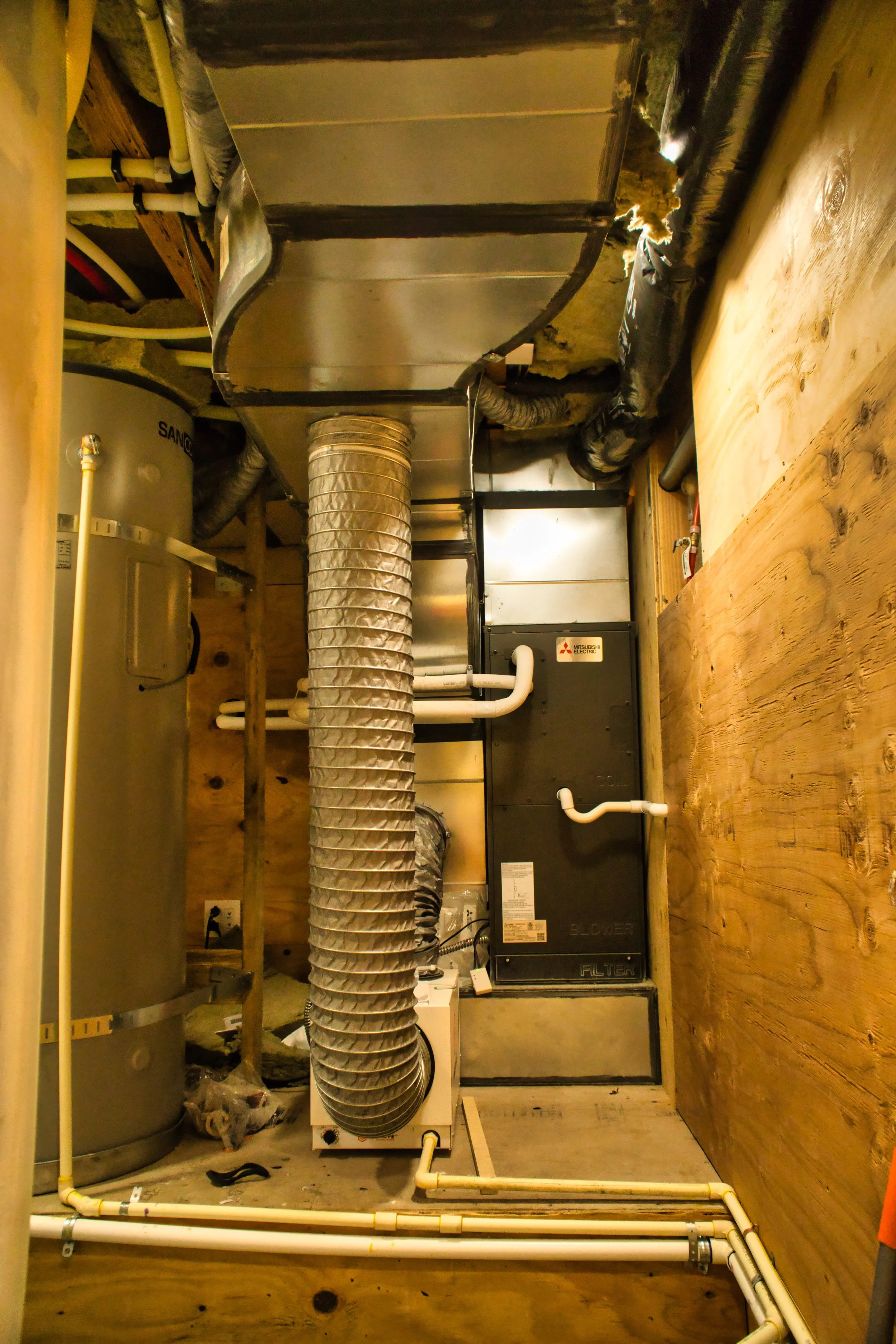
Air handlers, on the other hand, are quite simple. They consist of a fan, or blower, which pushes air over a coil, through which refrigerant is passed. The energy in the refrigerant is transferred to the air, or vice versa, and then the refrigerant is passed back out to the condenser to either absorb more energy or dump the energy with which it has been imbued. An air handler can be designed to have ducts attached to it, or to be ductless.
This brings us back, finally, to the infamous mini-split. Most people use this term to refer to the increasingly common ductless air handlers that mount high on a wall. This type of ductless air handler is so common because they are highly efficient and highly cost effective. However, some people object to their aesthetics, so a number of alternative ductless air handler styles are now available. There are options which recess into ceilings, mount low on walls mimicking a radiator, or even a product that looks like an art frame on the wall.
There is also an entire class of air handlers that are designed to be used with duct systems. Though they are essentially the same as mini-splits, these units incorporate more powerful fans to push air through these ducts. They also offer only limited consideration for appearance, since they are intended to be hidden from view. There are even ducted air handlers that provide more or less direct replacement options for traditional furnaces, allowing the existing ductwork to be reused.
Heat pump systems are also flexible in ways that many other heating and cooling systems are not. There are many “multi-zone” heat pumps available currently, which allow a single heat pump to connect to several different fan coils. Each fan coil will have a separate thermostat, allowing great flexibility in how a house is heated or cooled. We can also mix ducted and ductless fan coils to meet different needs in different parts of a building.
As you can see, there are a wide variety of things that can be described as heat pump systems, and the term “mini-split” really only applies to a few of them. A good HVAC design will evaluate all these options and combinations to determine which ones will best suit the specific needs of the project. Criteria can include comfort, cost, efficiency, reliability, and others. Relying on HVAC design by a particular HVAC contractor means you will likely be limited to the systems with which they are most comfortable, or worse yet, those which they are incentivized to sell. Working with a third party HVAC designer, such as Balance Construction Consulting, means that you will get a solution tailored to the specifics of your project.