
Equipment Selection
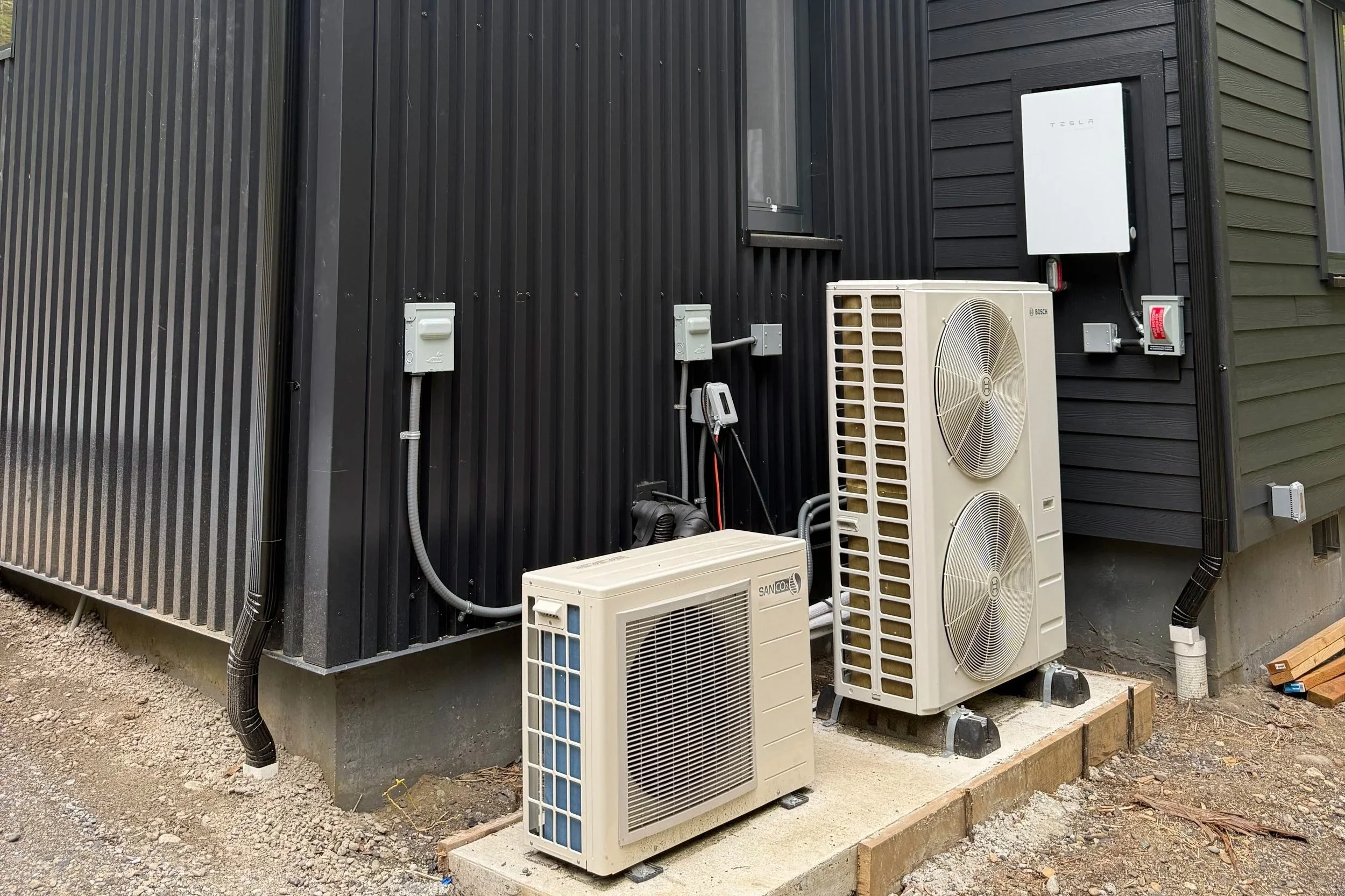
Manual J load calculation is only the first step in good residential HVAC design. Heat pump systems also require careful design consideration to deliver their best performance. Understanding the demands of the home is key, but the next step is to use ACCA Manual S to design a heating and cooling system that uses the right combination of equipment to serve those loads.
Gone are the days when a single furnace heating the whole home was the only option. Modern heat pump systems allow us to mix and match different kinds of equipment on the same project to precisely meet the comfort and energy needs of the building and its occupants.
Beyond that, many installers and designers will intentionally design oversized heat pump systems, but this actually results in inferior occupant comfort and decreased equipment life, as well as wasting money and energy. Another common system design error we see is the inclusion of inefficient electric resistance backup systems. These were critical ten years ago with older heat pump technology, but today they are very seldom needed. Accurate system sizing reduces upfront cost, simplifies installation, and maximizes comfort and efficiency.
However, there are many other subtleties to good heat pump design. In addition to the more familiar air-to-air and mini-split system, there are also air-to-water heat pump options. And all of these choices have significant impact on the Washington State Energy Code compliance for the project. We have the experience to help you sort through all the options and select a system that fits your needs, budget, and design.